In our previous article, we looked at how flexible working has become a day-one right for employees and what that means for businesses across Tyne & Wear.
The reality is that most employers understand the benefits of flexibility. It can improve employee satisfaction, help attract talent, and support staff retention. However, flexibility without structure can create challenges that are often hidden until they start affecting productivity, payroll, or team morale.
When Flexibility Becomes Difficult to Manage
Across Newcastle, Gateshead, Sunderland and the wider North East, many businesses are dealing with increasingly varied working patterns.
Employees may be working different start and finish times, hybrid office and home schedules, compressed working weeks, or variable shift patterns. While these arrangements offer benefits, they can also make it harder for managers to keep track of actual hours worked. Without a reliable system, small issues can quickly become bigger problems.
The Hidden Costs
Hours Creep - One of the most common challenges is "hours creep". This occurs when start times gradually become later, breaks become longer, or employees regularly leave slightly earlier than expected. Individually these may seem insignificant, but across a workforce they can have a measurable impact on productivity.
Payroll Inaccuracies - Many SMEs still rely on manual timesheets, spreadsheets, or manager estimates when calculating hours. When working patterns vary from week to week, inaccuracies become more likely, potentially resulting in overpayments, underpayments, overtime disputes, and unnecessary administration.
Fairness Across Teams - Nothing damages morale faster than the perception that different rules apply to different people. Managers need confidence that policies are being applied consistently across office staff, remote workers, engineers, drivers, and shift-based employees. Without accurate attendance data, making fair decisions becomes increasingly difficult.
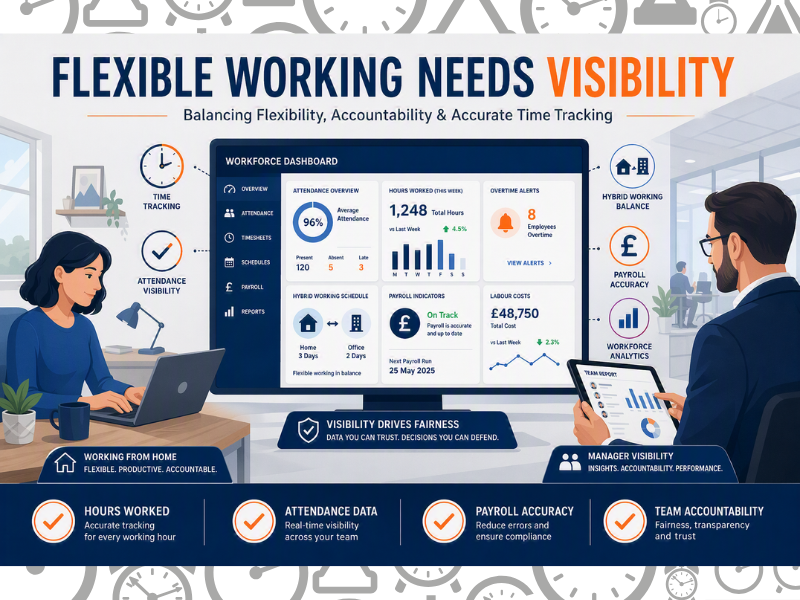
Visibility Matters - The most successful businesses don't use time and attendance systems because they don't trust their employees. They use them because they need visibility. Modern workforce management systems provide managers with real-time information about attendance, hours worked, overtime, absence, and shift patterns. This allows businesses to support flexible working arrangements while maintaining operational control.
Supporting Growth Without Adding Administration
Many Tyne & Wear businesses are growing, recruiting, and adapting to changing workforce expectations. The challenge is managing that growth without increasing administrative burdens on managers and HR teams. An effective time and attendance system can capture working hours automatically, reduce payroll preparation time, identify attendance trends early, support flexible working arrangements, and provide accurate audit trails. Most importantly, it allows managers to focus on running the business rather than chasing timesheets and resolving disputes.
Final Thought
Flexible working can be a valuable asset for both employers and employees. However, without accurate time tracking, flexibility can sometimes cost more than it delivers.
For businesses across Tyne & Wear, the key is finding the right balance between trust, flexibility and accountability. With the right workforce management tools in place, organisations can enjoy the benefits of flexible working while maintaining the visibility and control needed to operate effectively.
Next in the series: From Spreadsheets to Smart Systems – Why More Businesses Are Upgrading Their Time & Attendance Processes in 2026.
 Trybooking.com