If you think your workplace is a great place to work but your staff and / or volunteers don’t then you’ve got a big problem - and a costly one.
High rates of sickness and other absenteeism, lateness and staff turnover are warning signs that you don’t have the modern, inclusive workplace culture that’s expected today.
If your staff don’t feel valued and supported then they’ll perform poorly, have low levels of job satisfaction, high rates of absenteeism, and eventually they’ll leave.
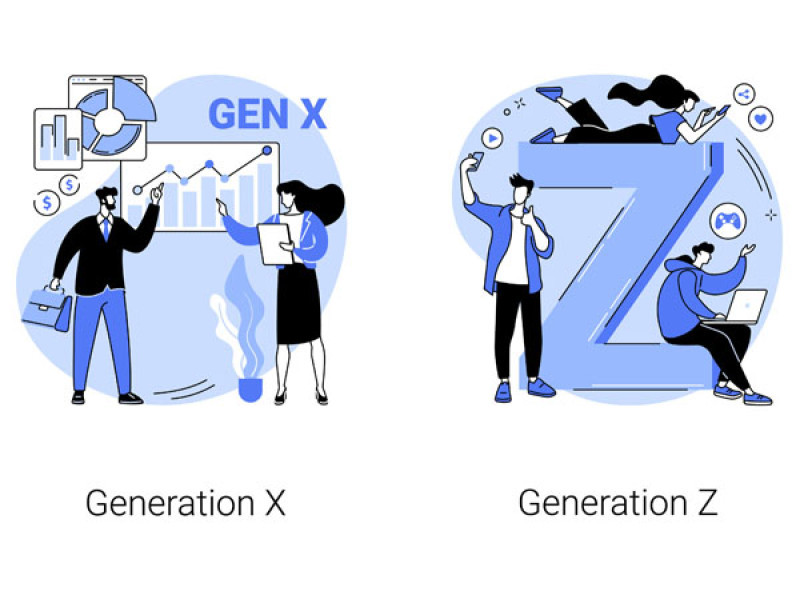
Workplaces are becoming increasingly multigenerational, but have your attitudes and workplace culture moved with the times?
The working age is generally defined as being between 16 to 64 years old (although obviously people do go back into work or volunteering in later life).
According to the 2021 Census, just over 62% of the White population of England and Wales and nearly 67% of the ethnically diverse population are of working age.
Of those aged between 25 and 49 years old, the ethnically diverse working age population is much higher – just over 58%, compared to nearly 51% of the White working age population.
Younger people aged 16 to 24 (i.e. Generation Z) make up just over a fifth, (21%), of the ethnically diverse working age population, compared to just under 16% of the White working age population.
Looking at the Yorkshire and Humber region specifically, the working-age population (i.e. aged 16-64) was 3.4 million in 2022, representing over 62% of the total population.
Even more specifically, figures for West Yorkshire show about 1.5 million working-aged people in 2022, while North Yorkshire had an employment rate of 79% for the 16-64 age group in 2023.
These figures provide a snapshot of the labour market and demographic trends nationally and in the Yorkshire region specifically.
This is important to you and your business or organisation because it shows you who your available talent pool is and how you can be more inclusive and diverse and promote age-based equality measures.
Age diversity fosters a supportive environment and contributes to a company's overall performance and stability, but the age of your staff and volunteers brings not only benefits but also challenges too.
An older workforce offers businesses and organisations many benefits. Older workers have deep industry knowledge and skills, gained through years of experience. They’re often happy to provide mentorship and pass on techniques, skills and expertise through knowledge sharing with younger staff. They have diverse perspectives that drive innovation. Enhanced loyalty and stability, plus a strong work ethic are characteristics of an older generation of employees. This means that, ultimately, you have reduced recruitment and training costs because staff turnover rates are lower - because older workers tend to stay with a business or organisation for longer.
Challenges of an older workforce can include potential physical health issues and increased absenteeism because of them, slower adaptation to new technology and ideas or ways of doing things, and the possibility of facing age-related stereotyping and bias from younger colleagues or management, which can cause human resource and occupational health issues.
A young workforce brings benefits such as a fresh perspective, new energy, up-to-date training and education, and innovative ideas. Younger employees often have a natural affinity for technology having grown up with it and used it throughout their life. They're eager to learn, are adaptable and they can be trained for specific company needs. This can translate into cost savings for your business or organisation, as wages are typically lower for younger employees. There are also opportunities for you to take on young people on apprenticeships. Youth-focused workplaces can experience higher engagement and productivity, with an enhanced sense of purpose, job satisfaction and wellbeing - all of which leads to improved employee retention and a competitive edge in attracting top talent.
However, younger people have different expectations of the workplace and working life.
The challenges of having a young workforce include a potential skills mismatch because prior education and training doesn't actually align with your current workplace needs. There’s the risk of mental health and wellbeing issues due to mismatched expectations, heavy workloads and work-related stress. On top of this, young people often face inverse ageism from older colleagues, are perceived to be struggling with the expected social and communication skills needed in a professional environment, and have high expectations over work-life balance, job satisfaction and purpose, pay, and benefits.
Research shows that workplaces are becoming increasingly multigenerational.
There are things that you as an employer should do to ensure that your workplace works for people of all ages and is more inclusive for all.
Because, the cost of a poor workplace culture is high.
If your staff and volunteers don’t feel valued and supported then they’ll perform poorly, have low levels of job satisfaction, high rates of absenteeism, and eventually leave - irrespective of how old they are.
According to the latest report from the Institute for Public Policy Research (IPPR), workplace absenteeism is a significant financial drain – on businesses, organisations, and the UK economy. The hidden cost of employee sickness and absenteeism reached a staggering £103 billion in 2023, an increase of £30 billion since 2018.
Moorepay calculated that absenteeism costs small businesses with under 250 employees approximately £547 per employee annually. Bigger companies with 250-999 employees lose about £429 per employee, while large businesses with over 1,000 employees lost a substantial £702 per person per year.
Do you know how much absenteeism is costing you?
Because, as Verve Healthcare say in their article ‘The Real Cost of Absenteeism to UK Employers in 2025: A Complete Analysis’:
“Despite these concerning figures, many organisations remain unaware of the true financial impact. Over a third of businesses admit they have no idea how much absenteeism costs them, even though more than 70% acknowledge that absence directly affects their profitability. ”
How can you fix this?
You can retain or recruit more staff, and improve morale and attendance rates, by showing the world that you’re an inclusive, accessible and sustainable business that’s great to work for or be part of. Nurture a workplace culture with strong values, is supportive and inclusive, and that has a focus on trust and equal treatment.
Start by training yourself, your staff and volunteers on diversity and inclusion (D&I).
Chris Naylor is a Member of the Kirklees Council D&I Steering group and a lecturer in D&I at Kirklees College. This firsthand knowledge and experience of Diversity and Inclusion means that he is ideally suited to support your business or organisation with Inclusivity Training.
Getting Inclusivity Training brings many benefits, and the simple fact is businesses and organisations with inclusive cultures are more likely to do better – meeting financial and performance targets, and have better overall business outcomes.
Because, when employees feel seen, heard, valued and included, they are more likely to be engaged and voice their opinions and ideas, be highly motivated, and more productive. And, crucially, they are also more likely to actually turn up for work. Over time, they stay longer with the business or organisation, too, as when employees have a sense of belonging and a great employee experience they don’t want or need to leave because they have true job satisfaction.
So contact Bnode and Chris to start your better business diversity and inclusivity journey.
 Get Ahead VA